


Instructions for use
The litter bag is the most important rescue device for canoeists. He helps rescue a swimmer from dangerous currents. Not only in the raging white water, but also on touring rivers (Wehre!) He should be on every river trip and always at hand. For professional emergency services, the litter bag is a proven tool for assistance in flood and accident situations
Standard situations
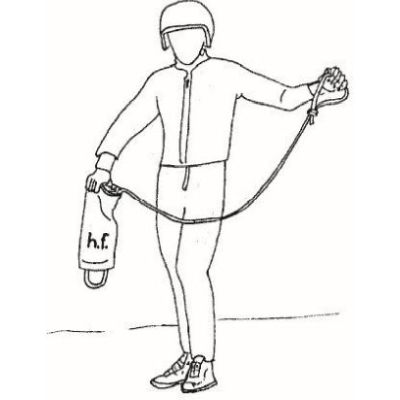
Preparation of litter
- Proper location choice (strategically favorable, no danger for the launcher, fixed stand).
- Open the sack.
- Take at least 2 meters since.
- Hold rope end in hand (not fix it somewhere), sack in throw hand
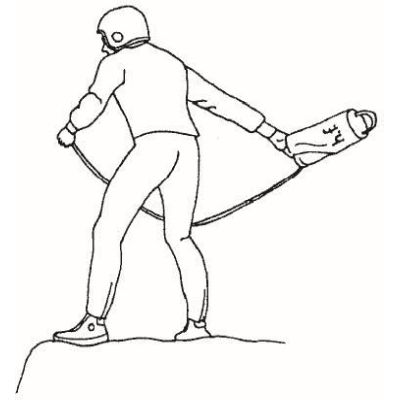
Throw
- Keep calm, do not panic.
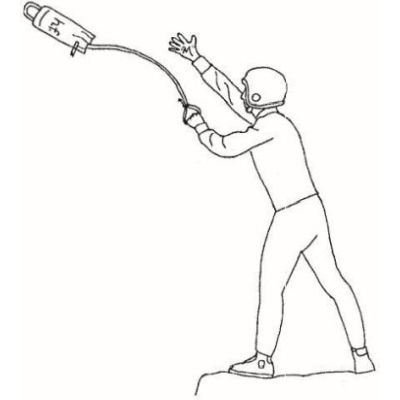
- Throw straight forward. The throwing hand swings perpendicularly on the body with the arm extended.
- At the same time loud cry: rope.
- Throw bag so that the swimmer can see and reach the rope. Throw over the swimmer.
- Hold the rope end until the swimmer has reached the shore.
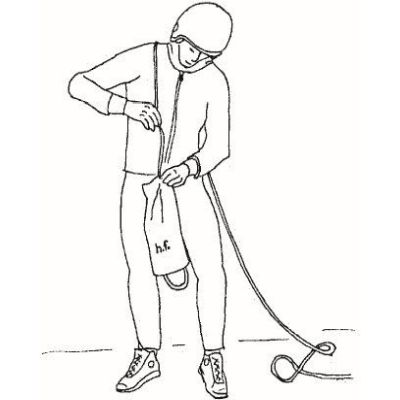
Filling
Each arm length rope in the container "plug". The rope then lays itself within the right loops. Don't put ready-made loops in the bag.
Care instructions
Care and lifetime
After each assignment, remove the rope and refill the litter bag. Before storage, thoroughly dry the rope and the container. Take out the rope for that. Avoid heat and unnecessary sun exposure. After prolonged storage (late after 3 months) refill the litter bag. Don't step on the rope. Do not steer the rope around sharp edges. When the rope is placed around wood for braking, strong friction heat is created, which can damage the rope. Use the litter bag only for the described use. Diversion of purpose, such as the use as a tow rope, is at the expense of safety. Check containers, rope and knots regularly for possible damage or changes. The knots must be correctly placed and tightly tightened, the free end of the cable 7-10 cm long. In the event of damage to the rope (cut or crack, fused rope surface, protruding threads or other irregularities), the life-saving appliance shall not continue to be used. In this case, the owner / owner must ensure that accidental use by third parties is also excluded. Defective equipment immediately retired, repaired or replaced. For safety reasons, the product should be replaced at the latest after 6 years or 250 days of use, even if no external damage can be detected.
Training
Check your new litter bag before the first use. Make some test throws to get familiar with it (into water to avoid damage). Production residues in new ropes become slippery when they get wet. It takes some use in the water before the rope gets really grippy. Tips for exercise: Try to hit a piece of driftwood in the current. Owning a tossack alone does not increase safety; Your knowledge, experience and training are also necessary. Exercise regularly. It may take years for the emergency to occur, but then the first litter has to sit.
Clean Rope Principle
In the English-speaking world, you do without the hand strap at the thrower to keep the rope knot-free. This reduces the risk that it can unintentionally get caught somewhere. Both principles, with and without grip loop, have their advantages and disadvantages. Consider which principle best suits your wishes and, if necessary, remove the hand strap on the rope end of the launcher.
Knives
Carry a rescue knife with you to be able to cut the rope if necessary.
Precautionary statement
In addition to this standard situation, the litter bag offers a suitably trained user countless other applications. References to these techniques can be found in the specialist literature, the training is offered in clubs and canoe schools. These techniques require special knowledge and training that cannot be taught under this guidance. Therefore, use the litter bag exclusively in the standard situation described above before you have completed further training, have been informed about possible risks and have learned to avoid them.